
Managing Family Meltdown
The Low Arousal Approach and Autism
- Authors
- Foreword
Regular price
£13.99
Regular price
Sale price
£13.99
Unit price
per

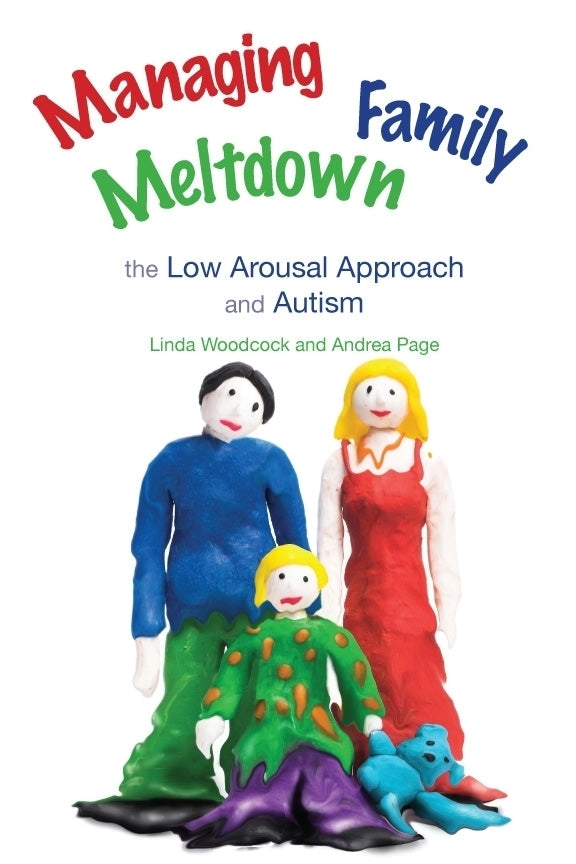
Challenging behaviour, violent outbursts and meltdowns can put a strain on the entire family of a child on the autism spectrum. This book offers practical, long-term and effective strategies to help resolve common challenging behaviours using a low arousal approach - a non-aversive approach based on avoiding confrontation and reducing stress and anxiety.
Managing Family Meltdown provides explanations for challenging behaviours, and offers a wealth of guidance on how families can manage different types of challenging behaviour, such as physical aggression and self-injury. The authors explore the difference between managing and changing behaviour; how our own behaviour can influence the situation; and show how by reducing stress and anxiety children are better able to process information becoming less likely to react in challenging ways. The pros and cons of medication and ways to look after your own health are also discussed.
This hands-on, practical book is appropriate for children who are non-verbal, as well as those with higher functioning autism and will be indispensable for families, carers and anyone involved with children on the autism spectrum.
Managing Family Meltdown provides explanations for challenging behaviours, and offers a wealth of guidance on how families can manage different types of challenging behaviour, such as physical aggression and self-injury. The authors explore the difference between managing and changing behaviour; how our own behaviour can influence the situation; and show how by reducing stress and anxiety children are better able to process information becoming less likely to react in challenging ways. The pros and cons of medication and ways to look after your own health are also discussed.
This hands-on, practical book is appropriate for children who are non-verbal, as well as those with higher functioning autism and will be indispensable for families, carers and anyone involved with children on the autism spectrum.
- Published: Dec 15 2009
- Pages: 176
- 232 x 166mm
- ISBN: 9781849050098
Press Reviews
Speech & Language Therapy in Practice, Gillian Welsher, speech therapiust, Newcastle upon Tyne
As a therapist working with children with autism and their families, you often have conversations with parents about "how things are at home". Discussing challenging behaviour can make you feel useless as a professional if you aren't able to offer any help. If the family are into reading self-help books, this is one you could definitely suggest.
From the Foreword by Andrew McDonnell, PhD, Clinical Psychologist, Director of Studio III Training Systems
...books such as this are long overdue in the marketplace. It is my hope that many family members will not only read this material but hopefully support others in the process... If this book empowers only a handful of families to manage these situations more positively then it will have achieved a great deal
The Midwest Book Review
A fine survey of the challenging behaviors and outbursts that can strain the entire family of a child diagnosed with autism. It offers a guide to many different strategies to diffuse and resolve common challenging behaviors, using a low arousal approach to behavior modification based on avoiding confrontation and reducing stress. Any family handling an autistic kid needs this.
Terri Mauro - About.com
It starts with a clear and accessible description of autism spectrum disorders, and moves on to a handy assembly of tips and techniques on various aspects of living with a child with autism. Co-author Linda Woodcock is the parent of an adult with autism who speaks from experience on matters both trivial and terrifying... It's nice to hear that adivce from a parent with experience dealing with the aggressive behavior of an older child, and the low-arousal point of view is also an interesting alternative to books that paint a hellish picture of autism, or focus hard on cures. Even families of children with disabilities outside the autism spectrum may find valuable advice and insight here -- about both your kids' meltdowns and your own.